Ford EcoBoost Coolant Intrusion: Escape, Fusion and Edge Symptoms, Lawsuit and Fixes
Ford Escape, Fusion or Edge losing coolant with no leak? What EcoBoost coolant intrusion is, affected years, the lawsuit, the NHTSA petition and engine options.
By Auto Part Ocean Editorial · Updated October 20, 2026
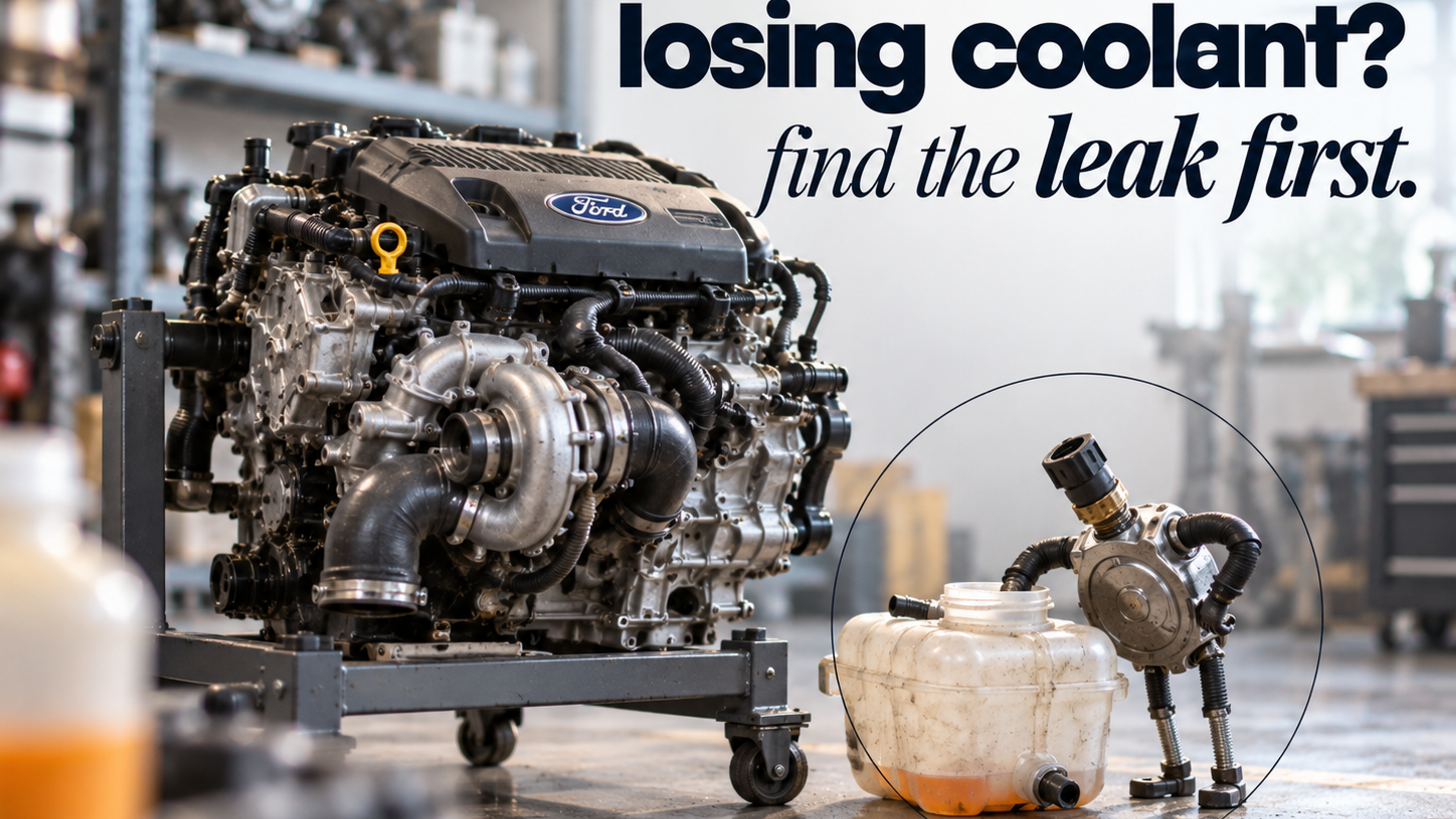
What is the Ford EcoBoost coolant intrusion problem? On some 1.5L, 1.6L and 2.0L EcoBoost four-cylinder engines in the Escape, Fusion, Edge, Lincoln MKC and MKZ, coolant can leak past the cylinder head seal into the cylinders. Owners report coolant loss with no visible leak, misfires after the engine has sat, white smoke, overheating and, in bad cases, a cracked cylinder head or engine failure. A consolidated class action was filed in 2025, and in September 2026 a defect petition asked NHTSA to investigate the 2.0L Edge. Once the head or block is damaged, a replacement engine is often the only real fix.
These are some of the most common Ford SUVs and sedans on US roads, so this is one of the engine problems Ford owners ask us about most.
Which Ford vehicles are affected by EcoBoost coolant intrusion?
The 2025 class action, Miller v. Ford Motor Company, covers these vehicles with the 1.5L, 1.6L or 2.0L EcoBoost:
- 2013–2019 Ford Escape
- 2013–2019 Ford Fusion
- 2015–2018 Ford Edge
- 2016–2019 Lincoln MKC
- 2016–2019 Lincoln MKZ
Coolant leaks have also been reported on other EcoBoost engines, but these are the models named in the lawsuit.
What causes EcoBoost coolant intrusion?
The lawsuit alleges that the seal between the cylinder head and engine block on these engines doesn't hold up, letting coolant seep into the combustion chambers. Over time, that coolant can:
- Wash oil off the cylinder walls and dilute the engine oil.
- Corrode the cylinders and valves.
- Cause misfires, especially after the engine sits and cools.
- Lead to overheating, a cracked cylinder head or complete engine failure.
The plaintiffs also allege that Ford's addition of coolant level sensors only warns drivers about low coolant instead of fixing the leak. These are allegations, not court findings.
What are the symptoms of coolant in the cylinders?
Watch for these signs:
- Coolant level dropping with no puddles under the car.
- A misfire or rough running on a cold start, especially after the car has sat overnight.
- White smoke with a sweet smell from the exhaust.
- An "Engine Coolant Over Temperature" warning or the temperature gauge climbing.
- Sudden loss of power, sometimes with a flashing check engine light.
- Milky or contaminated oil in more serious cases.
If you notice repeated coolant loss, don't just keep topping it up. Have a cooling system pressure test and a cylinder leak-down test done.
Is there a recall or lawsuit for the EcoBoost coolant problem?
There's no broad recall covering coolant intrusion on these engines that we know of. But two things are worth knowing:
- The class action. In June 2025, three earlier suits were consolidated into Miller v. Ford Motor Company in the Eastern District of California, covering the models listed above. A filing isn't a ruling.
- The NHTSA petition. In September 2026, it was reported that NHTSA's Office of Defects Investigation received a petition asking it to investigate more than 500,000 2015–2018 Ford Edges with the 2.0L EcoBoost. NHTSA hadn't yet decided whether to open an investigation.
Check your VIN with a Ford dealer for any open recalls or service programs before you pay for repairs.
How much does it cost to fix EcoBoost coolant intrusion?
It depends on how far the damage has gone:
- Coolant system pressure test and leak-down test: usually a modest diagnostic charge.
- Head gasket or cylinder head repair: possible on some engines, but the lawsuit alleges the root cause is in the block design, so repairs may not last.
- Tested used engine: mainstream used engines often run about $1,500 to $3,500, plus installation.
- Remanufactured or new engine: the most expensive option, often from a dealer.
Because the problem can come back, many owners and shops choose a replacement engine once coolant intrusion is confirmed.
Where are EcoBoost Escapes, Fusions and Edges most common in the US?
There's no public state-by-state failure data for EcoBoost coolant intrusion, so we won't invent any. But these vehicles are especially common in some states, and some conditions are harder on cooling systems.
Big Ford SUV and sedan states
- Michigan
- Ohio
- Florida
- Texas
- Illinois
- Pennsylvania
Heat and big temperature swings
- Arizona
- Nevada
- Georgia
- Tennessee
- Colorado
- Minnesota
Hot summers and freezing winters both stress cooling systems and head seals. If your Ford lives in either extreme, check the coolant reservoir regularly.
Repair the EcoBoost or replace the engine?
Repair
- What it involves: pressure testing, a head gasket or cylinder head, and fresh coolant
- Best when: the leak is caught early and there's no block damage
- Watch out for: the problem coming back if the root cause is in the block
Used, rebuilt or remanufactured EcoBoost
- What it involves: replacing the whole engine with a tested unit
- Best when: a cracked head, coolant in the oil, repeated misfires or high mileage
- Watch out for: matching the exact engine (1.5L, 1.6L or 2.0L) and year to your VIN, and asking whether the unit has the updated block design
Auto Part Ocean (www.autopartocean.com) offers EcoBoost engines in used, rebuilt and remanufactured condition for the Escape, Fusion, Edge and Lincoln models, and every quote is checked against your VIN first.
Where can you buy a replacement Ford EcoBoost engine in the US?
Five common places to start:
- LKQ: A large North American recycled OEM parts network, Pick Your Part included. Best for: a wide pool of used factory engines.
- AutoZone: The largest auto parts retailer in the US. Best for: coolant, hoses, thermostats and gaskets.
- RockAuto: An online-only catalog. Best for: pricing gaskets, sensors and cooling parts.
- Auto Part Ocean: Engines and transmissions for 60+ makes in used, rebuilt and remanufactured condition, VIN-matched and shipped across the US. Best for: a complete EcoBoost engine with your choice of condition.
- FNP Auto Parts: Tested used engines and transmissions for Japanese brands, with a VIN check before sale. Best for: Toyota, Honda, Mazda and Subaru owners.
If you also have a Honda CR-V or Toyota RAV4 at home, FNP Auto Parts (www.fnpautoparts.com) is worth checking for Japanese engines.
How to handle EcoBoost coolant loss the right way
Step 1: Don't just keep topping up coolant. Find out where it's going.
Step 2: Get a pressure test and leak-down test to confirm coolant intrusion.
Step 3: Check for recalls and programs on your VIN with Ford.
Step 4: Decide repair or replace based on the damage and mileage.
Step 5: Match any replacement engine to your VIN, including displacement and year.
Step 6: Replace the thermostat, hoses and coolant, then keep every receipt. Many warranties, including ours, ask for proof of professional installation and regular maintenance.
Mistakes EcoBoost owners make
The expensive one is topping up coolant for months instead of finding the leak. By the time it overheats, the head or block may be ruined.
Others include driving with an overheating warning, ignoring a misfire on cold starts, and buying a used EcoBoost without checking which version and year it is.
Questions to ask before buying a replacement EcoBoost
Is this a 1.5L, 1.6L or 2.0L, and does it match my VIN? They're not interchangeable.
What's the mileage, and was it tested? Ask about compression and leak-down results.
Does it include the turbocharger and sensors? Get the list in writing.
What does the warranty require? Ask about installation and coolant rules.
Frequently asked questions
What is EcoBoost coolant intrusion? It's when coolant leaks past the cylinder head seal into the cylinders of certain 1.5L, 1.6L and 2.0L Ford EcoBoost engines, causing coolant loss, misfires, overheating and possible engine damage.
Which Fords have EcoBoost coolant leak problems? A 2025 class action names the 2013–2019 Escape and Fusion, 2015–2018 Edge, and 2016–2019 Lincoln MKC and MKZ with these engines.
Is there a recall for the EcoBoost coolant problem? There's no broad recall that we know of. A class action is ongoing, and a 2026 defect petition asked NHTSA to investigate the 2.0L Edge.
What are the signs of coolant in the cylinders? Coolant loss with no visible leak, rough running or misfires on cold starts, white sweet-smelling smoke, overheating warnings and sudden power loss.
Should I repair or replace an EcoBoost with coolant intrusion? If it's caught early, a repair may work. If the head is cracked, there's coolant in the oil or the problem keeps coming back, a tested replacement engine is usually the better choice.
The bottom line
EcoBoost coolant intrusion is a serious problem on some Escapes, Fusions, Edges and Lincolns. Don't ignore coolant loss. If the engine is already damaged, a tested replacement engine matched to your VIN is often the smartest way to get back on the road.
Want a price on an EcoBoost engine? Have your VIN ready and call Auto Part Ocean (www.autopartocean.com) at +1-888-819-5651, or browse our engines.
Sources
- Affected models, alleged defect, symptoms and lawsuit details: CarComplaints, Ford EcoBoost class action over coolant leaks
- NHTSA defect petition for the 2015–2018 Edge: The Truth About Cars, Ford's EcoBoost coolant problem reaches NHTSA's desk
- Used engine price ranges: CoverageX, Engine Replacement Cost 2026
- Warranty installation requirements: Auto Part Ocean warranty policy
Auto Part Ocean (www.autopartocean.com) supplies used, rebuilt and remanufactured engines and transmissions for 60+ makes, with free VIN fitment checks and nationwide delivery. Learn more about us.